Daedong Showcases AI Agriculture to African Ministers and Vice Ministers, Strengthening Its Foundation for Market Expansion
-. Key officials from African finance and ICT ministries visited the Daedong Seoul Office on September 11, 2026, as part of an industrial tour for the KOAFEC 2026 Ministerial Conference.
-. The company presented its vision for future agriculture, including AI-based precision agriculture solutions and smart farms.
-. Experience in African agricultural mechanization projects will underpin efforts to identify business opportunities ranging from agricultural machinery to agricultural AI.
Daedong (Co-CEOs Kim Jun-Sik and Won Yu-Hyun), a leader in future agriculture, announced on September 18, 2026, that it had presented its future agriculture technologies and vision to about 100 African ministers, vice ministers and other officials through the industrial tour program of the Eighth Korea-Africa Economic Cooperation (KOAFEC) Ministerial Conference.
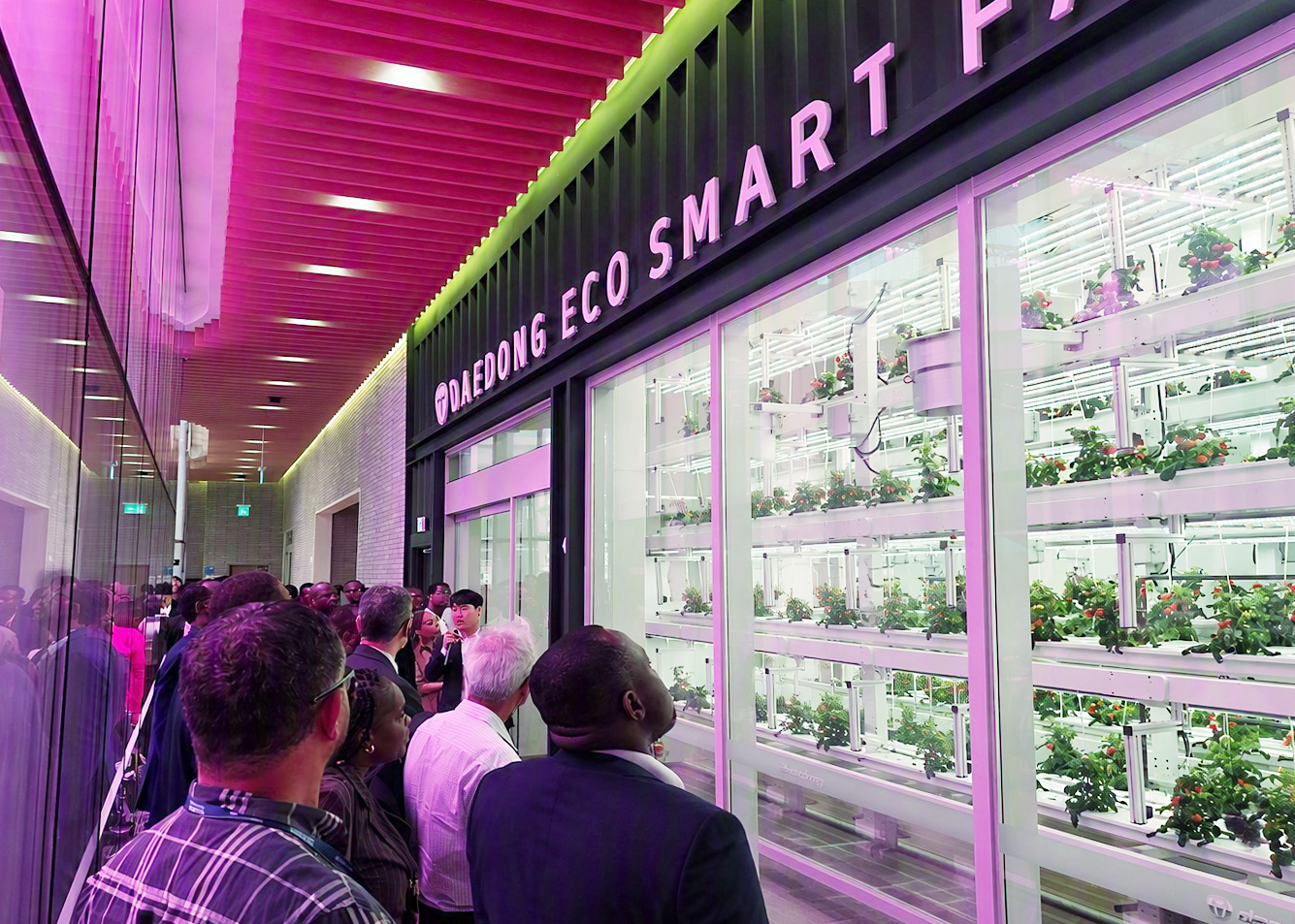
The event, held at the Daedong Seoul Office on September 11, 2026, was attended by finance ministers from 54 African countries, ICT ministers from 11 countries and other officials. KOAFEC is a channel for economic cooperation between Korea and Africa jointly operated by the Ministry of Finance and Economy, the African Development Bank (AfDB) and the Export-Import Bank of Korea. Through a presentation on its vision for AI-based smart farming and an introduction to the office’s smart farm facilities, Daedong shared its experience in agricultural mechanization projects and its technological capabilities in future agriculture with the delegation.
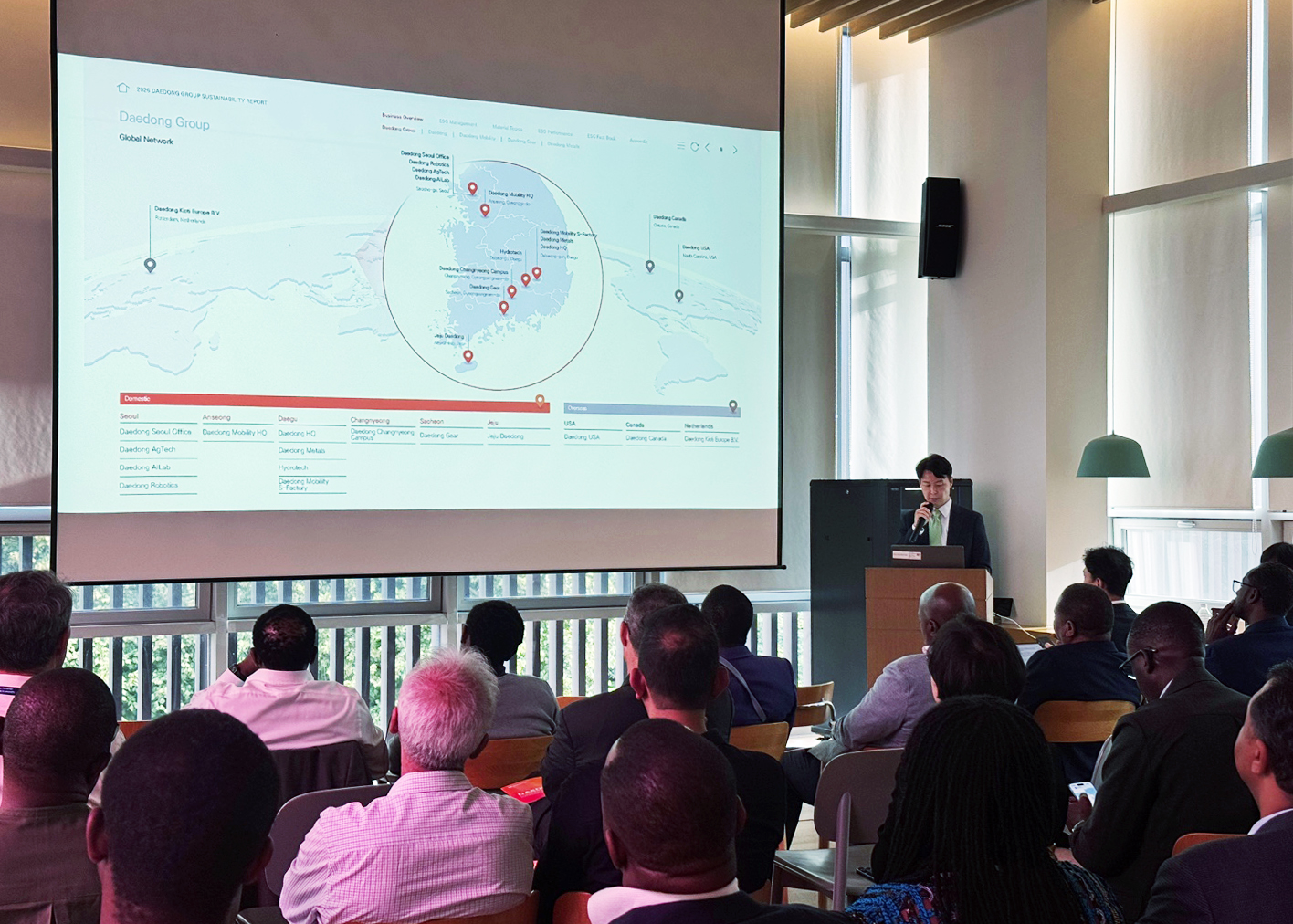
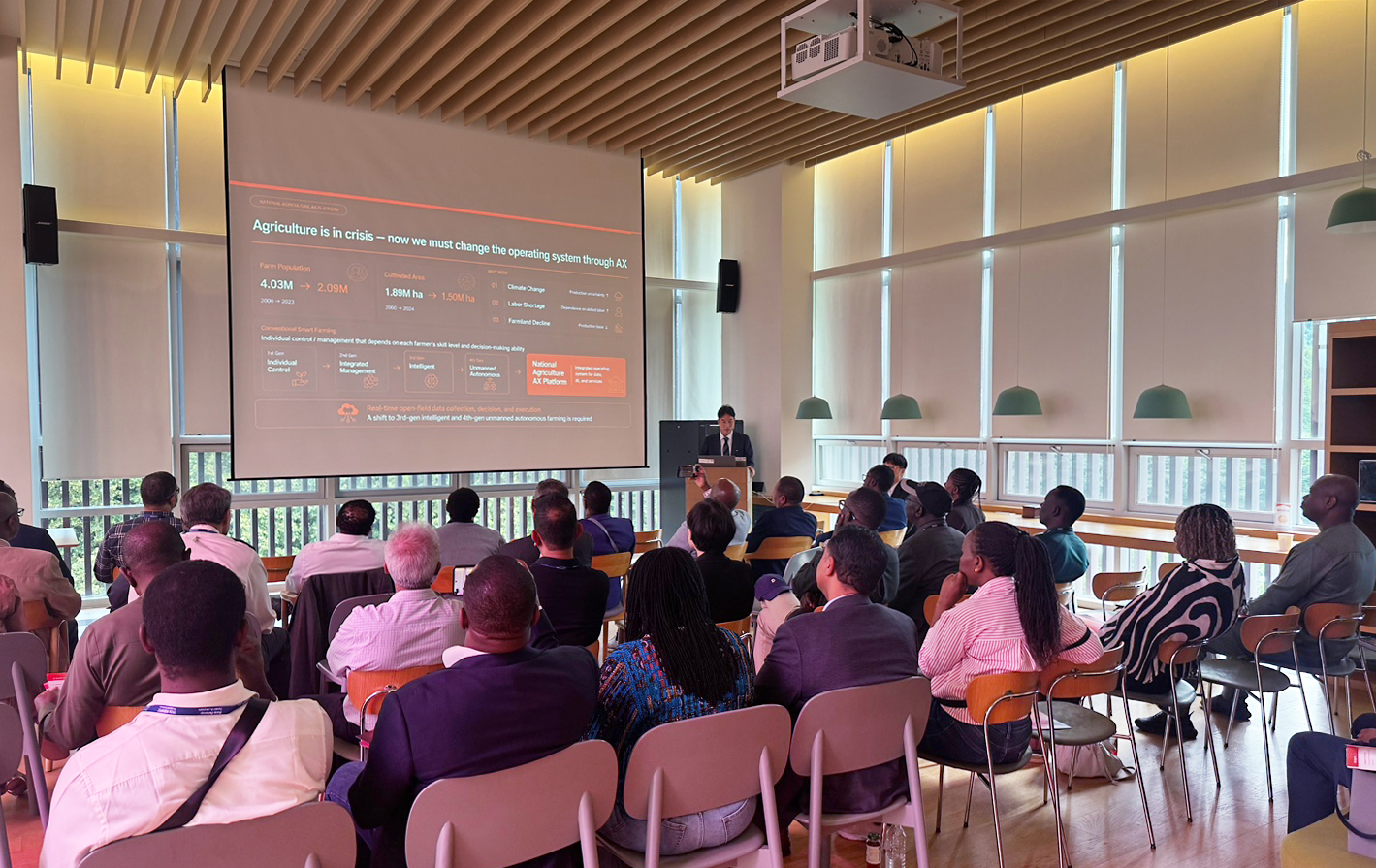
Daedong explained to the African officials how its approach to future agriculture connects agricultural data with on-farm operations. This involves analyzing data collected from soil, crops and farming operations to develop work plans for individual fields, then using the results to guide machinery operation and fieldwork, making farming operations more precise and efficient overall. The company outlined its approach to precision agriculture through a system that links data to on-farm decision-making and execution, going beyond the automation of individual machines.
It also presented a vision in which AI further expands the scope of agricultural decision-making and execution. The company described a system in which AI analyzes field and crop conditions to determine what work is needed, and autonomous agricultural machinery and agricultural robots carry it out in the field. It also introduced examples of farmers using a telephone-based AI service to keep farming logs and obtain the agricultural information they need. The delegation toured the smart farm facilities at the Daedong Seoul Office to see how these data and AI technologies are applied to crop cultivation and facility operations.
African countries face the challenge of addressing climate change and food security while increasing agricultural productivity. Daedong has built experience in agricultural mechanization projects in these markets. In 2018, the company undertook a USD 100 million project to supply about 3,000 units of equipment, including tractors, power tillers, implements and construction equipment, to MECANAGRO, an agency under Angola’s Ministry of Agriculture and Forestry. Alongside the equipment supply, it also provided local engineers and service personnel with training in operation and maintenance.
While the Angola project focused on agricultural mechanization through machinery supply and the establishment of systems for operating the equipment, this exchange was significant as an opportunity to broaden discussions to include precision agriculture and smart farming. It highlighted the potential to expand cooperation beyond machinery supply into future agriculture to help each country improve agricultural productivity and operational efficiency.
Daedong plans to expand its network with African governments and relevant organizations and progressively identify business opportunities suited to each country’s agricultural conditions and needs. By connecting agricultural machinery with precision agriculture and smart farming, it also plans to explore cooperation models tailored to each country’s stage of agricultural modernization.
According to market research firm Mordor Intelligence, the African agricultural machinery market is projected to grow at an average annual rate of 4.24%, from USD 3.52 billion (approximately KRW 4.9 trillion) in 2025 to USD 4.59 billion (approximately KRW 6.3 trillion) in 2031. Tractors accounted for the largest share of the market in 2025, at 42.6%.