
Daedong Mobility Joins Government Partnership to Accelerate Adoption of Electric Motorcycles for Delivery
-. Fifteen organizations take part, including the Ministry of Climate, Energy and Environment, delivery platform companies, and battery providers
-. Aims to raise the share of electric motorcycles to 25 percent of new registrations by 2030 and more than 60 percent by 2035
-. Plans to develop delivery-optimized electric motorcycles and expand the supply of high-quality locally manufactured models
Daedong Mobility (CEO Won Yu-hyun), Daedong Group’s AI field robotics subsidiary, announced on March 6, 2026, that it will collaborate with the government, delivery platform operators, and charging infrastructure companies to accelerate the shift to electric motorcycles in the delivery sector and expand market adoption.
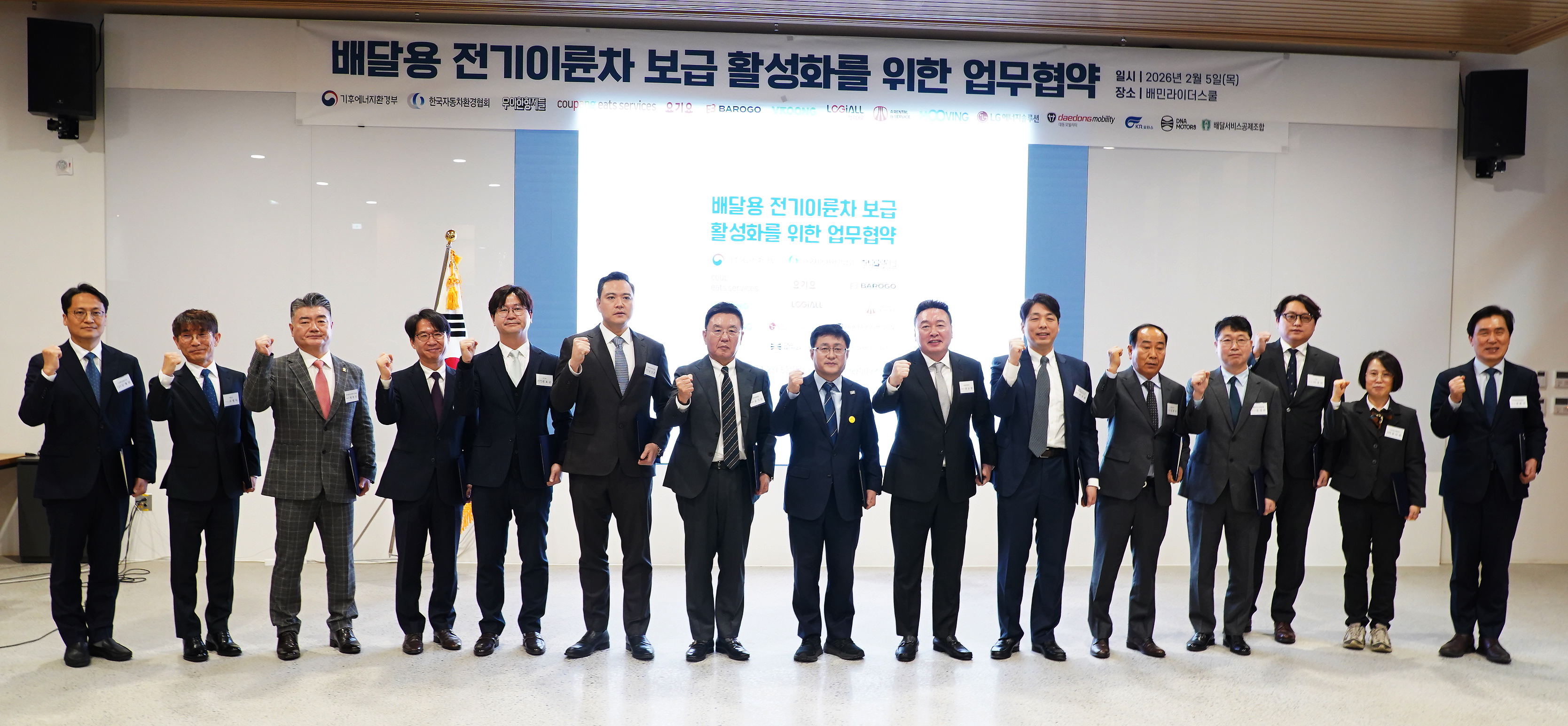
On March 5, the company participated in a “memorandum of understanding signing ceremony on promoting the adoption of electric motorcycles for delivery services,” held at the Baemin Rider School in Hanam, Gyeonggi-do. Hosted by the Ministry of Climate, Energy and Environment, the event brought together 15 companies and organizations, including Daedong Mobility, motorcycle manufacturers, three major delivery platform operators, delivery service agencies, electric motorcycle rental providers, the Delivery Service Mutual Aid Association, and the Korea Automobile Environmental Association.
The agreement aims to increase the share of electric motorcycles among newly deployed delivery bikes to at least 25 percent by 2030 and more than 60 percent by 2035, contributing to lower emissions and a quieter urban environment. To achieve this goal, participants across the value chain, including manufacturers, battery swapping infrastructure providers, delivery platforms, and rental companies, have aligned to support the development of a comprehensive electric motorcycle ecosystem.
Korea’s motorcycle market averages approximately 100,000 units annually, with most used for delivery services. Delivery riders typically travel 150 to 200 kilometers or more each day and require quick turnaround times, which has led to a strong preference for internal combustion models. To shift this structure, the government and industry will first expand the deployment of Battery Swap Station (BSS)-based electric motorcycles. Over the longer term, they plan to enhance the performance and convenience of small and mid-sized electric motorcycles to drive broader adoption.
With this agreement as a catalyst, Daedong Mobility will step up efforts to expand the adoption of electric motorcycles tailored to delivery operations. Its flagship GS100 series is a high quality electric scooter built with a 92 percent localization rate. The model comes equipped with a telematics system as standard, including front and rear dash cameras and remote control capabilities, enhancing rider convenience and operational efficiency. Alongside BSS-compatible models, the company broadened its lineup in June last year by introducing a plug-in version that can be charged at home, giving riders greater flexibility in how they manage charging.