
Daedong to Develop ‘Data-Driven Precision Agriculture Model for Open-Field Soybeans’ in Saemangeum
-. Daedong joins a government-funded project led by the National Institute of Crop and Food Science to systematize labor-saving management that boosts soybean productivity and cuts labor.
-. H1 2026 demonstrations confirmed fertilizer savings of about 20% through variable-rate fertilization and labor savings (driving time) of up to 70% through autonomous operations.
-. H2 2026 demonstrations will expand to drone-based crop growth management and autonomous harvesting, further refining a precision agriculture model tailored to each soybean-growing area.
Daedong (Co-CEOs Kim Jun-Sik and Won Yu-Hyun), a leader in future agriculture, announced on July 22, 2026, that it has embarked on an approximately four-year effort to develop a data-driven precision agriculture[i] model for open-field soybeans with the National Institute of Crop and Food Science.
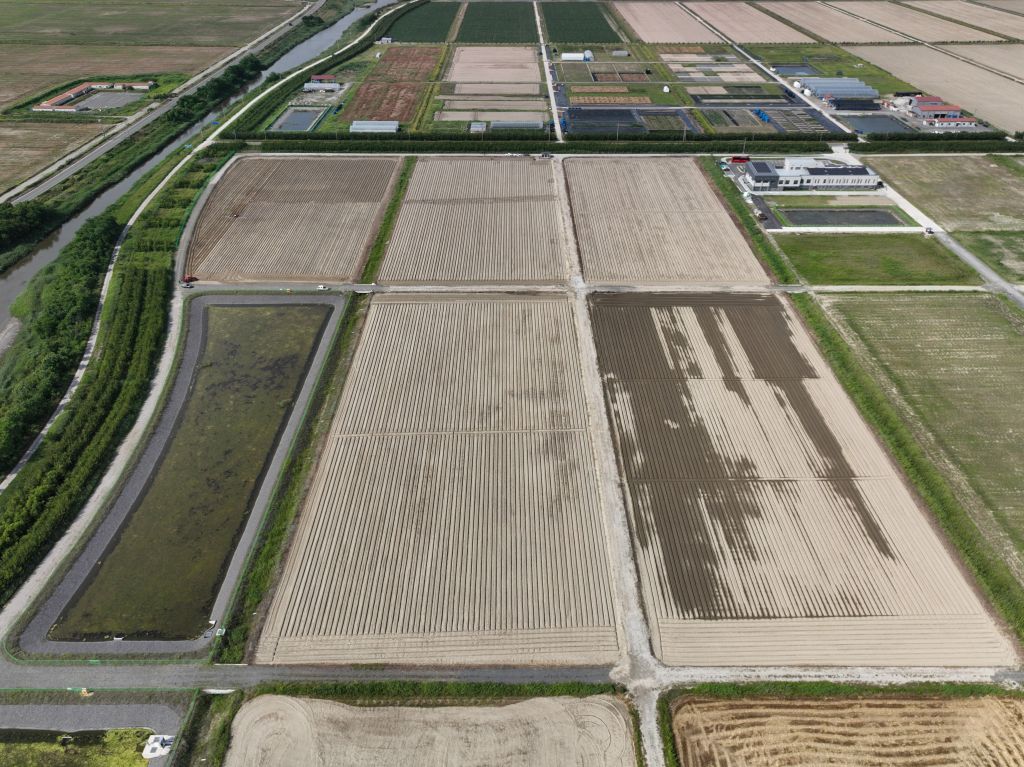
This project builds on Daedong’s strategy to expand precision agriculture in Saemangeum. Since last year, Daedong has been working with local agricultural cooperative corporations to collect precision agriculture data and enhance solutions for staple crops such as wheat and soybeans on about 1,140,000 pyeong of farmland—equivalent to 526 soccer fields—within the Saemangeum Specialized Multi-Grain Production Complex in Gimje-si, Jeonbuk State. Participation in this government-funded project with the National Institute of Crop and Food Science adds cooperation with government agencies, further broadening the reach of Daedong’s precision agriculture efforts centered on Saemangeum.
This initiative is part of the government-funded ‘Development of Technologies to Increase Upland Farming Productivity’ project led by the National Institute of Crop and Food Science. It aims to establish systematic labor-saving[ii] management and an area-wide integrated management solution to improve productivity and reduce labor requirements for open-field soybean production across farming areas of 50 hectares or more (about 150,000 pyeong). To this end, Daedong has been collecting data and conducting on-farm technology demonstrations to develop precision agriculture for open-field soybeans since April 2026 at the 10-hectare (about 30,000 pyeong) Reclaimed Land Agriculture Research Center in Saemangeum.
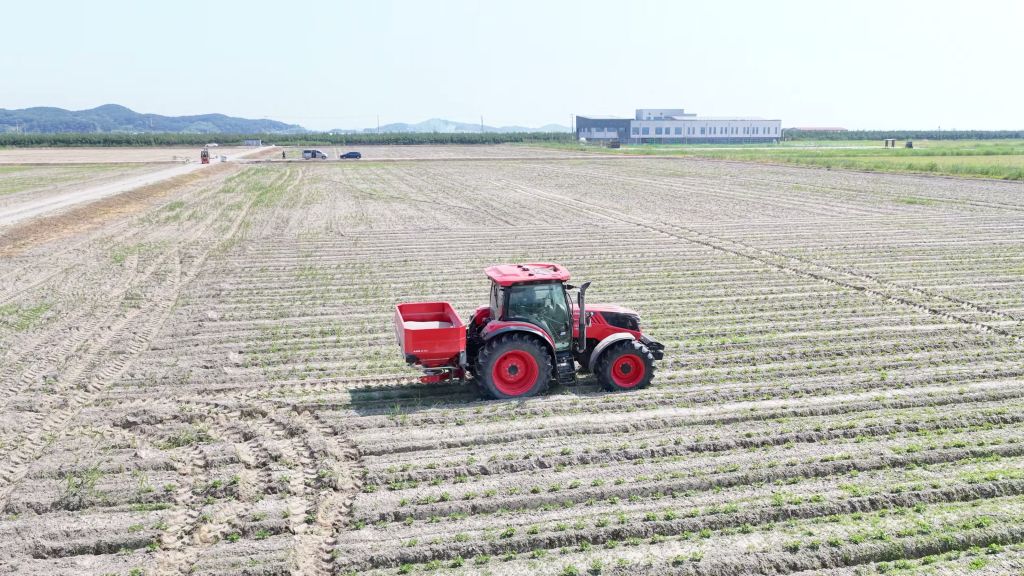
Specifically, Daedong plays a key role in collecting and analyzing production environment data for each growing area through area-wide demonstrations of precision field operations using autonomous tractors and smart implements, along with drone-based remote sensing and monitoring. It is refining variable-rate fertilizer prescription technology by integrating soil-scanning and crop growth data. It is also linking ISOBUS-based data on operating routes, fertilizer application rates and operating time with its precision agriculture platform to build an area-wide integrated management solution.
Daedong confirmed clear results in demonstrations covering tillage, seeding and fertilization in the first half of 2026. Variable-rate fertilization based on soil-scanning data reduced fertilizer use by about 20% compared with conventional farming, while unmanned autonomous tillage using AI tractors reduced labor requirements (driving time) by up to 70% compared with operator-driven operation. Autonomous seeding also reduced operator fatigue from repetitive tasks, demonstrating both precision and labor-saving benefits.
In the second half of 2026, demonstrations will expand to crop growth management and harvesting. Drone imagery of crop growth across large fields will be collected and analyzed to quickly identify growth variations and areas showing abnormalities, reducing the time and labor required for people to inspect every part of each field. Drone-based pest control and topdressing (supplemental fertilization) will also reduce labor requirements for pest control and fertilizer application. Daedong also plans to deploy soybean combine harvesters fitted with autonomous driving kits to ease the burden of labor-intensive harvesting.
Daedong is connecting every stage of open-field soybean cultivation through precision agriculture technologies, starting with soil analysis and progressing through tillage, seeding and fertilization to crop growth monitoring, pest control, topdressing and, finally, harvesting. Plot-specific soil, field operation and crop growth data accumulated throughout the cultivation cycle are a key asset, providing the basis for automated farming logs and data-driven decision-making. Daedong plans to leverage these data as part of its roadmap for commercializing an AI agricultural platform to expand into AI-powered farming support, farm operation management and agricultural machinery management services.
The demonstrations are particularly significant because they will establish optimal cultivation models based on production environment data from major growing areas, not just reclaimed land, and build a system for improving productivity and reducing labor requirements. Improving productivity and lowering production costs in open-field soybean cultivation can make Korean-grown soybeans more price-competitive and is expected to help improve Korea’s soybean supply and demand structure, which relies heavily on imports.
[i] What is precision agriculture? It is a solution that uses agricultural big data and AI to maximize yields while minimizing resource use. Soil is analyzed before seeding to prescribe customized basal fertilizer applications, and crop growth data collected by drones are used to create variable-rate fertilization maps for individual field sections. Applying only the amount of fertilizer needed improves productivity while optimizing resource use.
[ii] Labor-saving: Reducing labor requirements through mechanization.