Daedong Unveils Agricultural Physical AI Strategy at “2026 Tech Day”
-. Daedong presents a management-centered, subscription-based AI farming service powered by agricultural physical AI, pointing to a new model for farm operations
-. Korea’s only vision AI tractor, built on 5.1 million field data images, allows multiple machines to operate simultaneously through a single app
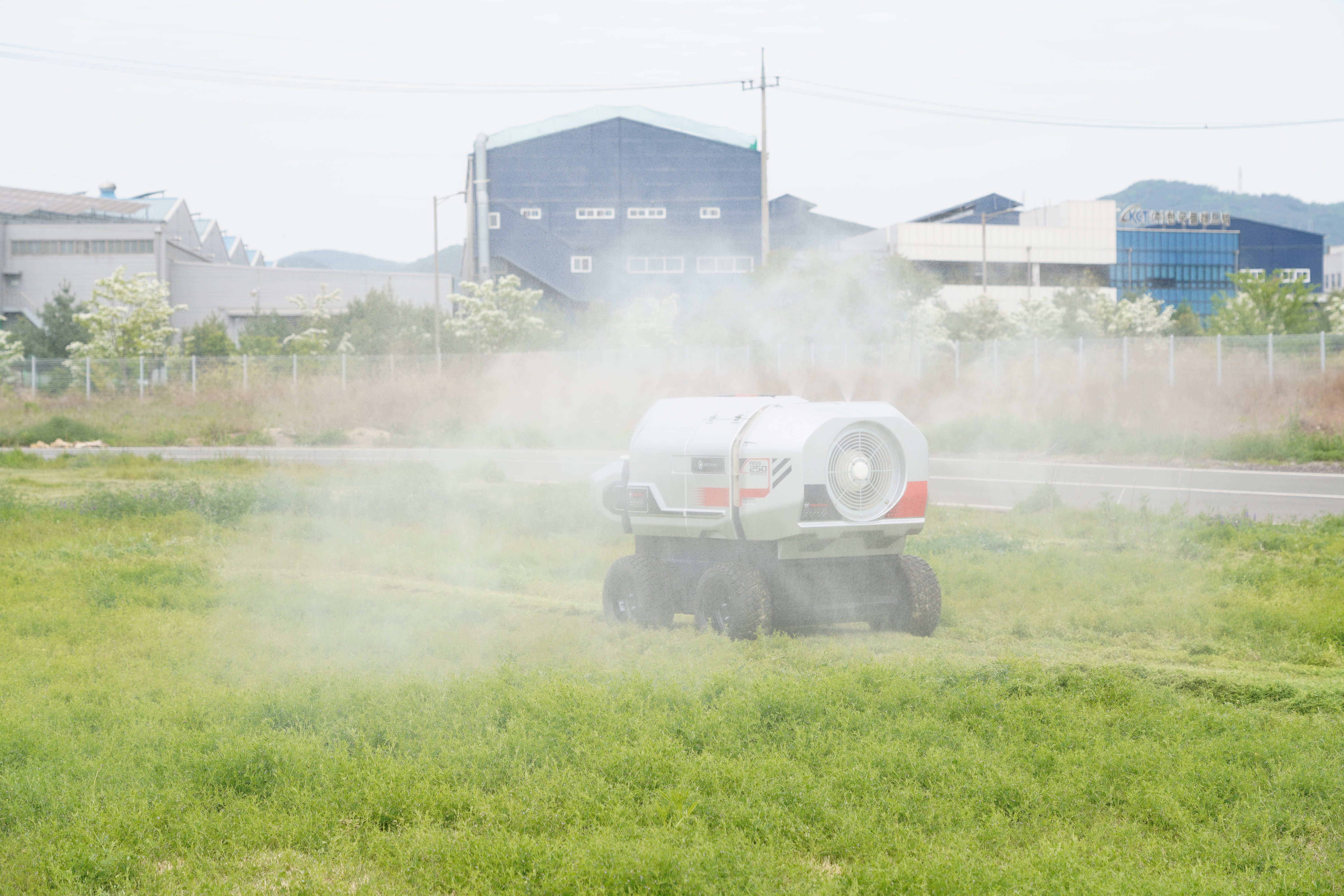
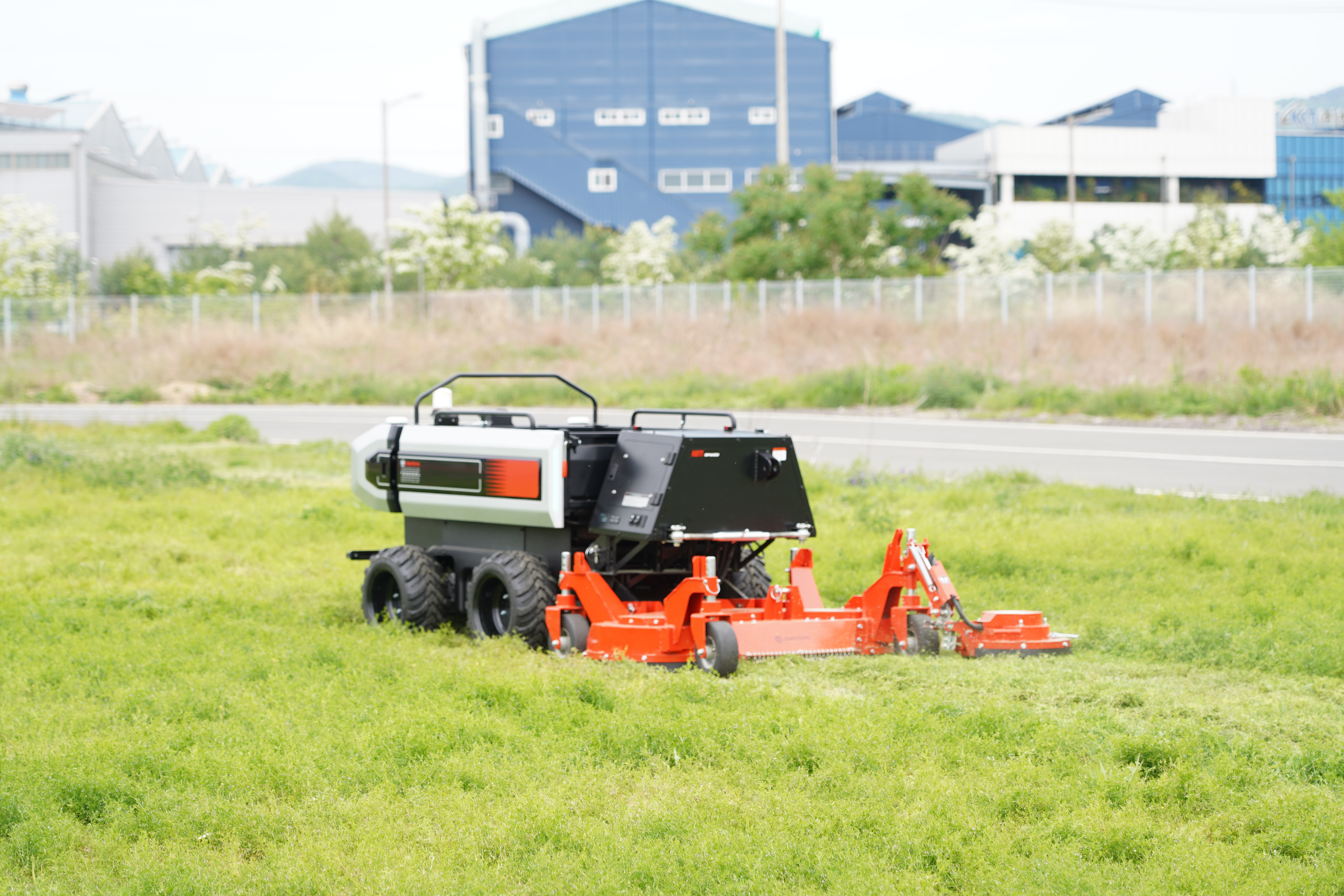
-. Agricultural transport robots expand into factory applications, while voice-controlled transport robots and mowing robots are scheduled for launch in the first half
-. AI-powered agriculture evolves by accumulating and learning from data with every hour of operation, driving a global shift in farm productivity
Daedong (Co-CEOs Kim Jun-sik and Won Yu-hyun), a leader in future agriculture, announced on April 30, 2026, that it unveiled its strategy to transform into an agricultural physical AI company at “2026 Daedong Tech Day.” The company also introduced an AI tractor and transport robot developed under that strategy.
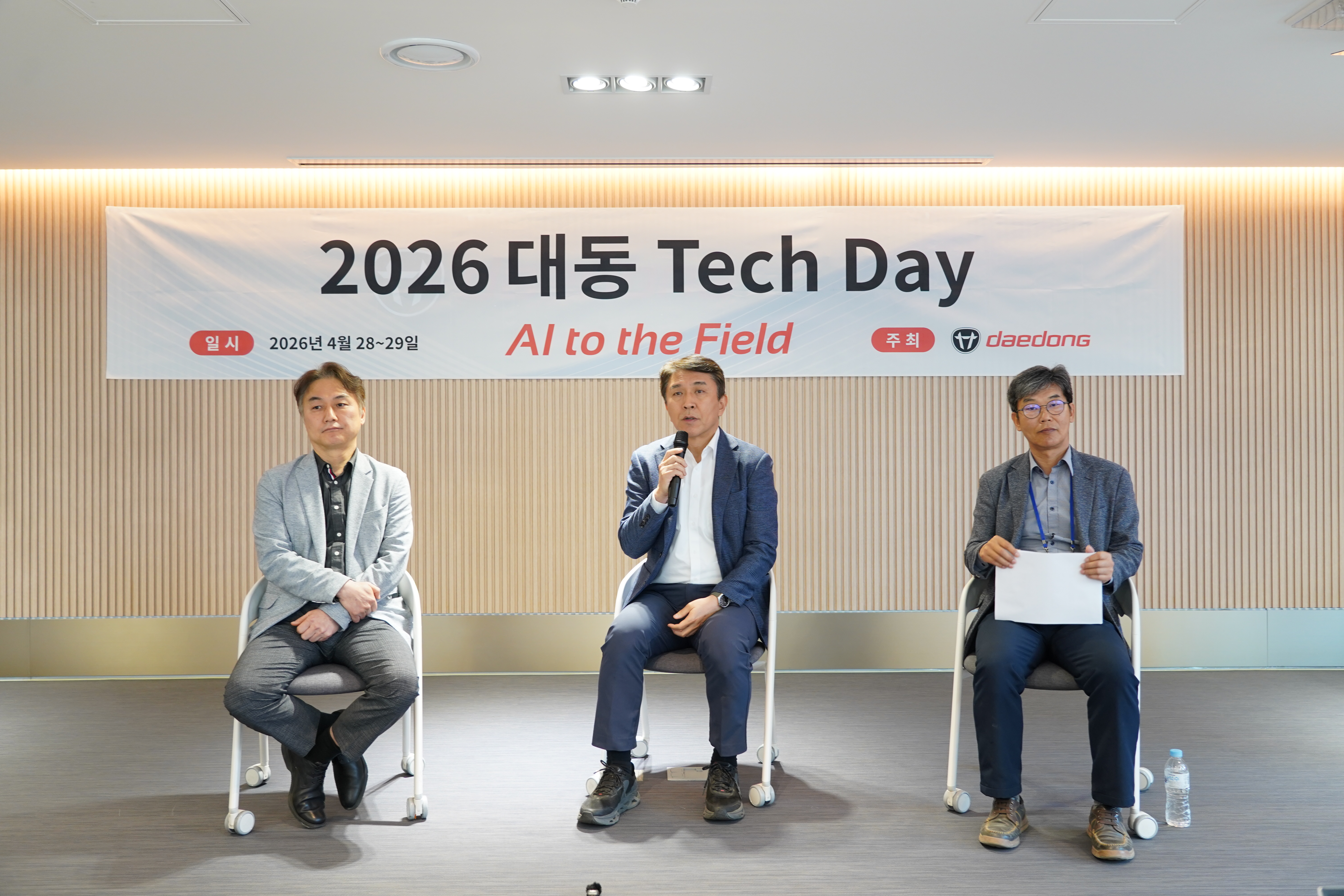
Held from April 28 to 29 at Daedong’s Changnyeong Campus and Daedong Mobility’s S-Factory, “2026 Daedong Tech Day” featured a range of programs, including ▲ the group’s agricultural AX strategy ▲ a demonstration of the AI tractor’s unmanned autonomous operation ▲ a tour of tractor performance and quality testing sites ▲ a presentation on the agricultural robot development roadmap ▲ demonstrations of indoor-outdoor autonomous transport robots and mowing robots.
At the event, Daedong presented agricultural physical AI as a way to reduce the amount of labor required in farming and help farmers improve productivity by shifting their role from hands-on operation to monitoring and oversight. The company also outlined plans to use data collected in the field to make overall farm operations more efficient. Daedong said it intends to move beyond agricultural machinery sales and expand into a recurring revenue model built around data and services.
◆ Bringing Agricultural Physical AI to the Field with a Korea-Specific AI Tractor Distinct from Global Players
Daedong’s strategy for bringing AI into Korean agriculture is built on two pillars: transforming farm machinery into robotic systems and developing AI-powered farm management services. By deploying AI tractors and agricultural robots, Daedong aims to solve real challenges on the farm while continuously improving its AI with field data collected in real time. Using that data, Daedong plans to offer farm management services that help farmers lower production costs and increase yields of high-quality crops. The company aims to build a model that grows equipment sales and service revenue together.
To support this strategy, Daedong established subsidiaries specializing in robotics and AI and collected 5.1 million data images for physical AI over the four years since 2022. Daedong’s key advantage lies in its ability to translate the problems farmers face in the field into structured data and systematically use that data to train its AI.
At the event, Daedong demonstrated how a single app can assign tasks to two AI tractors at the same time without operators on board. The demonstration showed the tractors using six cameras mounted on their smart roofs to map the optimal work path, carry out the assigned task, and detect field ridges and unexpected obstacles in real time. Daedong’s AI tractor is also designed to keep improving as it gathers more field data, using MLOps, or Machine Learning Operations, and OTA, or over-the-air updates, to continuously upgrade AI performance.
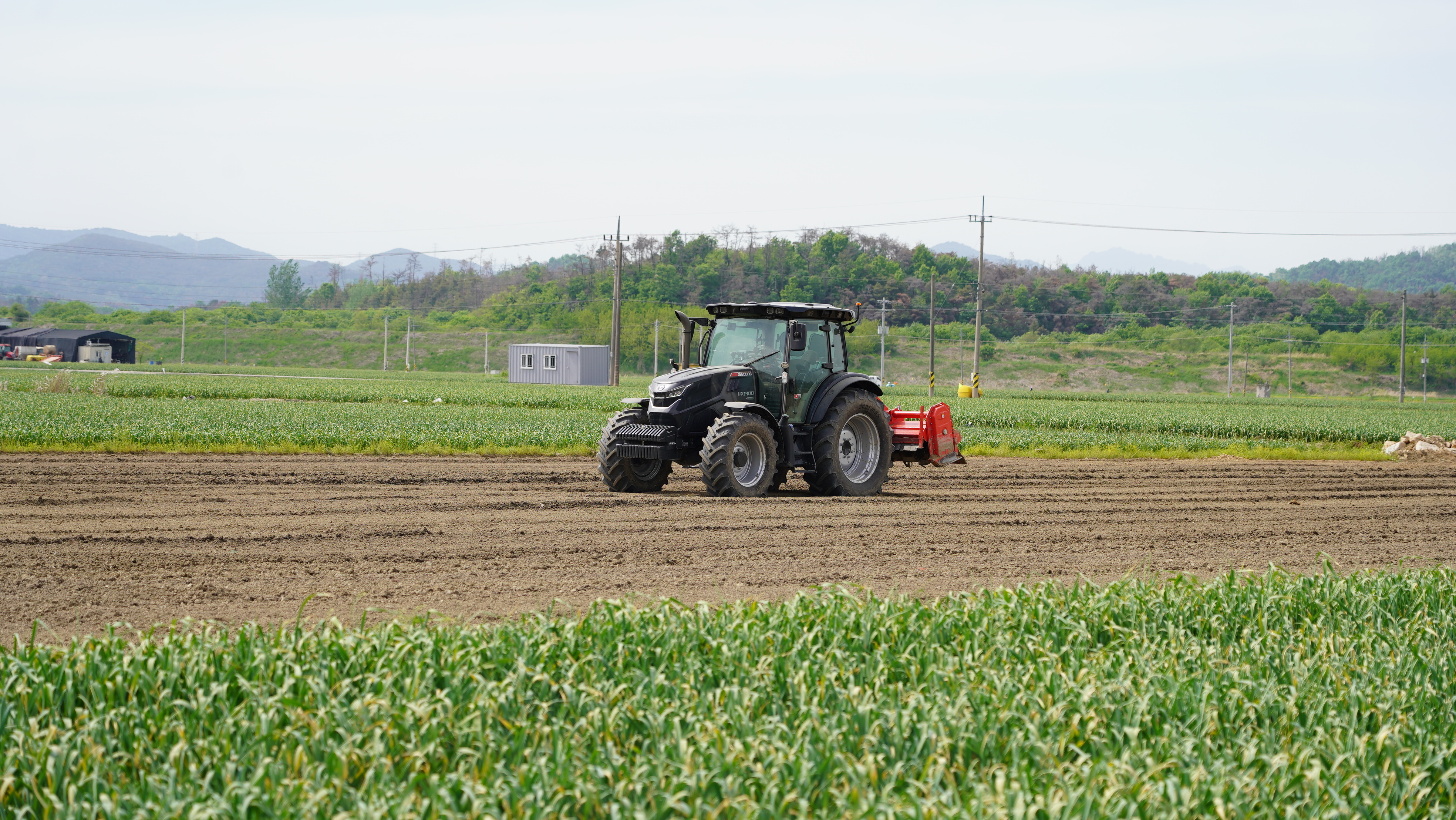
The AI tractor is especially notable because it is built for small, irregular farmland, a segment that global manufacturers such as John Deere and Kubota have not yet fully addressed with vision AI. Unlike the large, open fields common in North America and Europe, Korean farmland is often divided into smaller plots bordered by ridges. For autonomous tractors, recognizing those ridges is essential. Without accurate boundary detection, the machine can leave the field. Daedong says its AI tractor is currently the only tractor in the world that uses vision AI to recognize farmland boundaries and perform agricultural work autonomously.
With the launch of the AI tractor, Daedong plans to build out its data- and service-based recurring revenue model in phases. The company is developing a subscription-based AI farming service that collects and analyzes field data from AI tractors in real time through Daedong’s Operation Center. That data will be used to improve machine performance and support precision farming solutions. The model would give customers access to services that continue to improve after the initial equipment purchase, while helping Daedong gradually expand its platform-based recurring revenue business.
The AI tractor’s vision system can currently recognize more than 20 models across four attachment categories: rotary tillers, plows, harrows, and ridgers. Daedong plans to expand the range of attachments the system can identify. The company will initially provide software updates for unmanned operation free of charge to gauge customer response, before gradually moving toward paid services.
Daedong’s AI tractor is designed to perform precise autonomous work without an operator on board, helping reduce fatigue and safety risks from long hours of driving and operating farm machinery. While the tractor handles the assigned work, farmers can monitor progress and prepare for other tasks nearby, such as applying crop protection products and fertilizer, transplanting rice seedlings, or managing drainage channels. This allows them to make better use of their time and improve productivity per work hour.
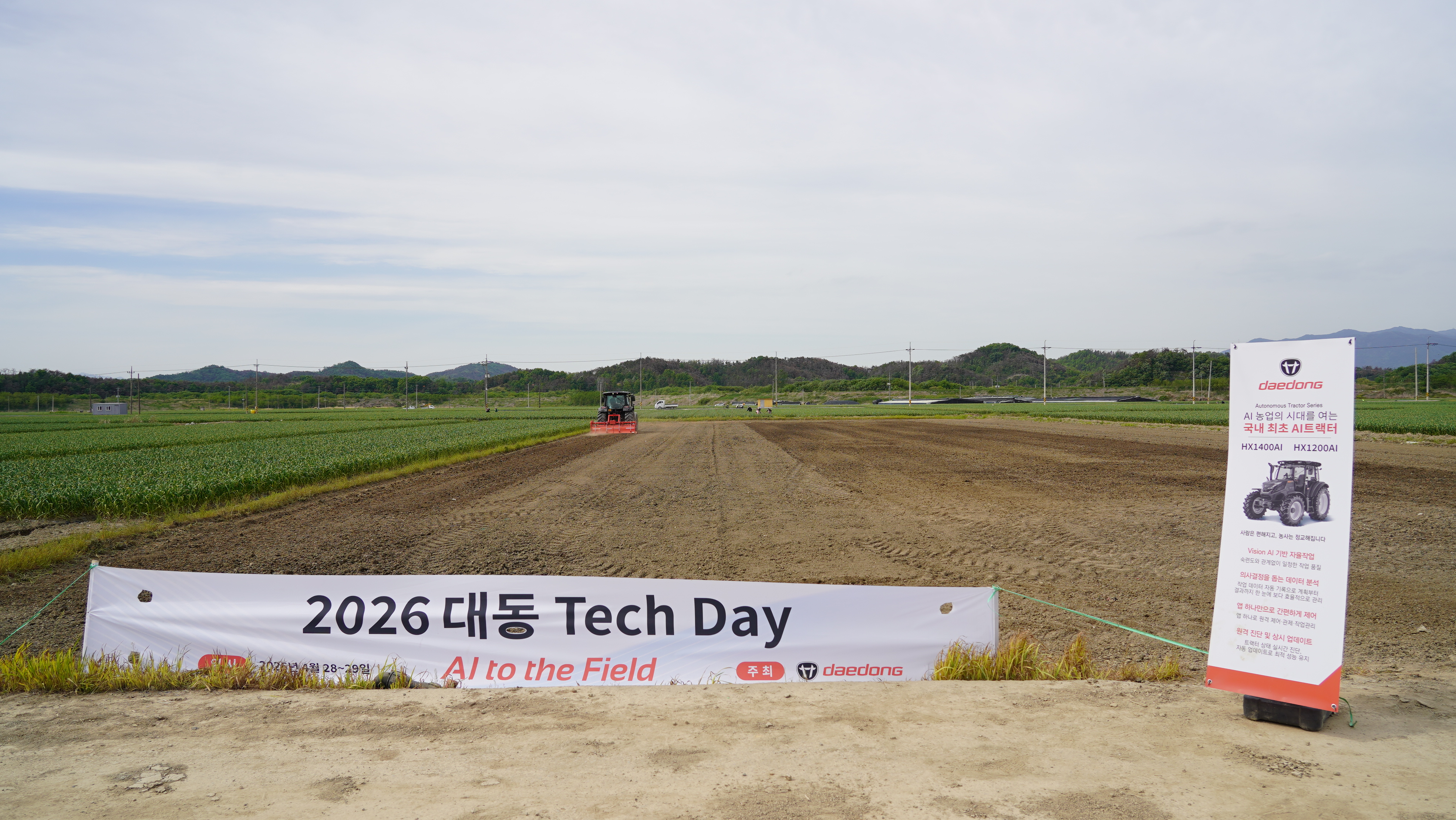
Daedong also gave attendees a look at the testing process behind the AI tractor before it reaches customers. The company demonstrated a series of validation tests, including operation in extreme temperatures as low as minus 20 degrees Celsius, slope stability testing, water spray testing to verify electronic control performance in rainy conditions, and comprehensive reliability testing for its autonomous driving software. The test site tour underscored the depth of Daedong’s quality validation process and its focus on ensuring reliable performance in the unpredictable conditions of real farm environments.
◆ Smarter Transport Robots as Daedong Expands into Industrial Applications
On April 29, Daedong Robotics (CEO Kang Seong-cheol), Daedong’s AI robotics affiliate, presented its agricultural robot development roadmap and demonstrated the products it has developed so far. Positioning itself as a “field AI robot platform and service provider,” Daedong Robotics is a key pillar of Daedong Group’s agricultural physical AI ecosystem.
Daedong Robotics is working toward a 2030 roadmap to turn small, medium, and large electric autonomous platforms into multi-purpose agricultural robots by adding hardware for transport, mowing, spraying, monitoring, harvesting, and other tasks. The company is advancing three core technologies: ▲ AI for unstructured environments ▲ off-road hardware system design for unstructured terrain ▲ autonomous driving and robot operation technologies optimized for open fields and industrial plant environments.
Daedong Robotics has been building a structured data set from real farm environments to improve autonomous driving AI for unstructured agricultural settings. The company tested driving performance and durability across varied terrain, including uphill and downhill slopes, flat ground, and rough surfaces, while also running precise tests to measure autonomous path deviation. Last year, it collected 3.6 million data images through more than 1,000 hours of repeated autonomous driving. Going forward, Daedong Robotics plans to add sensors to its transport robots to improve terrain recognition and continue R&D in areas such as RGB camera-based 360-degree obstacle detection.
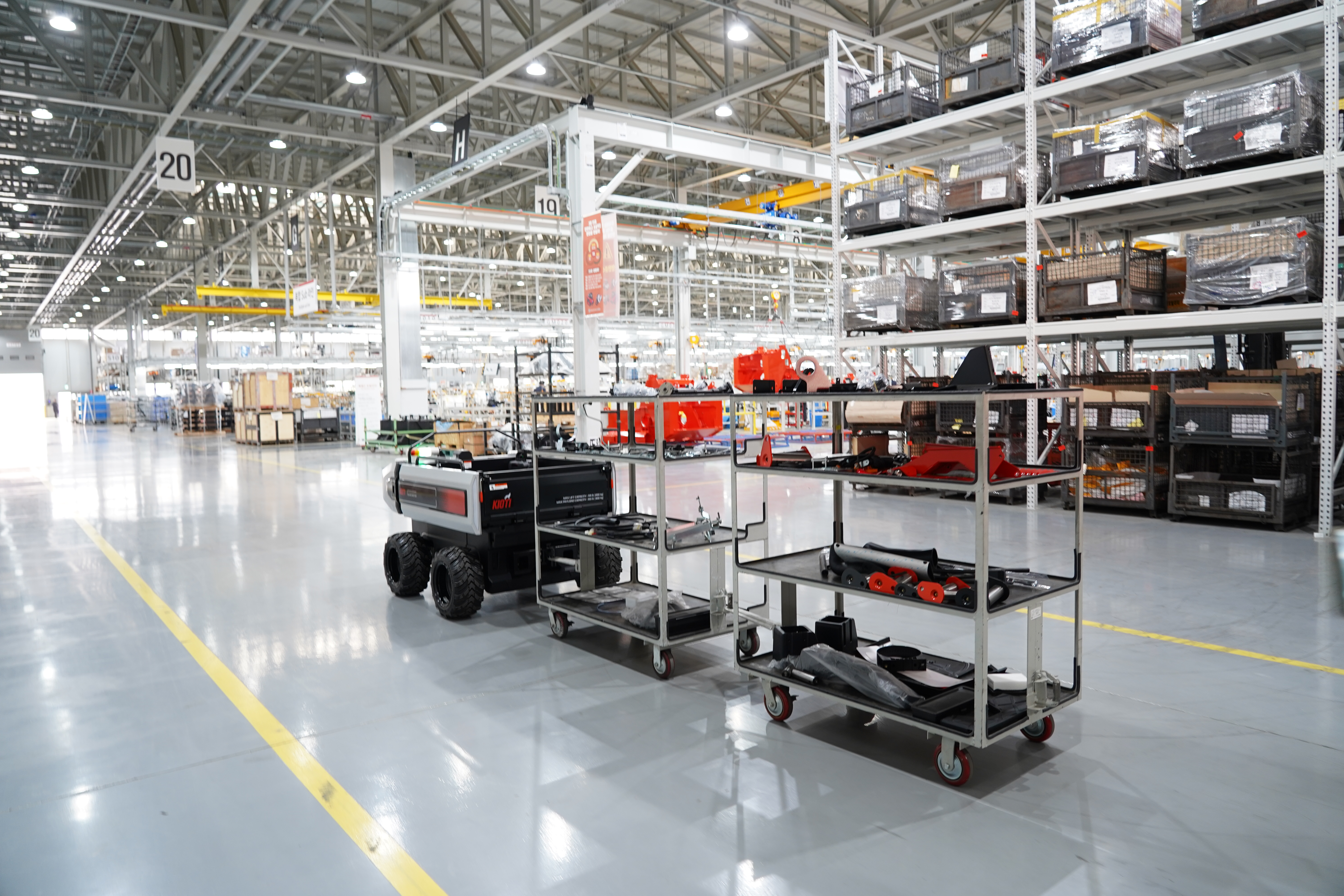
The indoor-outdoor autonomous transport robot demonstrated at the event shows how Daedong is extending autonomous driving technology developed in agricultural environments into industrial settings. In the demonstration, the robot started outdoors, passed through an automatic factory door, stopped at key points, and transported cargo. It uses GPS-based autonomous driving outdoors and LiDAR-based autonomous driving indoors. When connected to a trailer, it can carry up to one metric ton of cargo on flat ground. Since last year, Daedong has been working with major companies on pilot projects to deploy the robot in factory environments.
The mowing robot unveiled next was developed to reduce the workload for orchard growers, who need to mow frequently during the summer. The robot uses a mowing attachment mounted on the transport robot. During the demonstration, it autonomously followed a set path across a wide field while cutting weeds. Daedong also showcased a version of the transport robot equipped with AI voice recognition. The robot can be controlled by voice command, eliminating the need for manual input during operation. This makes it a practical solution for improving access to advanced equipment in rural communities with aging workforces. Both products are scheduled to launch in the first half of this year.