
Daedong Gear Set to Turn KRW 1.9 Trillion Order Backlog Into Revenue as EV Component Sales Ramp Up
-. Construction of 20 new lines for mass-producing EV components ordered in 2024–2025 is more than 80% complete, with completion due by year-end.
-. EV component revenue is projected to reach at least KRW 75 billion in 2027, roughly triple this year’s KRW 27 billion.
-. New orders in H1 2026 alone totaled KRW 262.8 billion, equivalent to 119% of last year’s annual revenue, bringing the order backlog to KRW 1.892 trillion.
Daedong Gear is set to start generating revenue in earnest from the KRW 1.892 trillion order backlog it has built up since 2024.
Daedong Gear (CEO Seo Jong-Hwan), Daedong Group’s powertrain specialist, announced on July 9, 2026, that it will complete preparations for mass production of key electric and hybrid electric vehicle (EV/HEV) components ordered in 2024–2025 and begin mass production by year-end, with EV component revenue ramping up in 2027.
Daedong Gear is in the final stages of preparing for mass production to turn its existing orders into revenue. To manufacture EV components for Hyundai Motor Company, Hyundai Transys and other customers, it is building a total of 20 new production lines—including a rotor assembly line, an output shaft production line and differential gear equipment—with construction progress reaching the 80% range as of June 2026. EV component revenue, which reached KRW 12 billion in H1 2026 and is expected to total approximately KRW 27 billion for the year, is therefore projected to nearly triple to at least KRW 75 billion in 2027.
The company has also brought its quality capabilities up to global automaker standards. To ensure NVH performance (noise, vibration and quietness), a key competitive factor for EV drivetrain components, it has introduced transmission error (TE) measurement equipment and established an inspection system that detects minute gear machining errors and abnormal vibrations in advance. It also uses global automaker-level processes—including initial sample inspection reports (ISIR), process audits (P2 Audit) and process sign-off (PSO)—as part of a quality validation framework that ensures rigorous management of customer requirements from development through mass production. The company has thus put the production and quality foundations in place ahead of time to ensure reliable supply as soon as large-scale mass production begins.
In the automotive components industry, mass production begins after an 18–24-month period following a customer project award, during which suppliers develop products, install production equipment, validate quality and obtain customer approvals. Components are then typically supplied for 7–10 years. While revenue depends on the volumes customers order, each awarded project establishes a long-term supply relationship and thus a stable business foundation. Daedong Gear’s KRW 1.892 trillion order backlog secured since 2024 is also based on this long-term supply model and is expected to underpin the company’s medium- to long-term revenue growth.
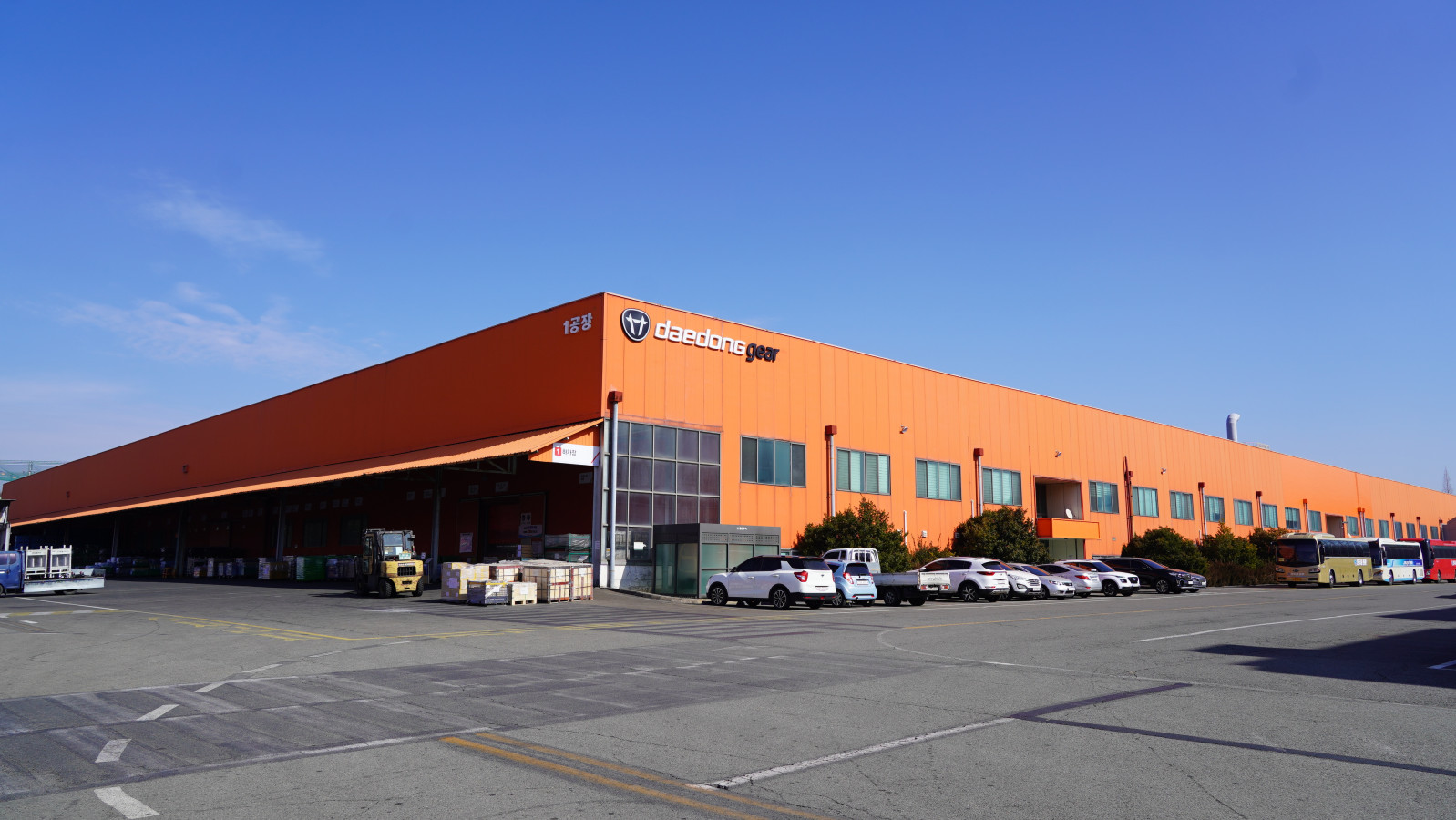
Daedong Gear’s orders are growing rapidly. In H1 2026 alone, the company secured a total of KRW 262.8 billion in new orders across major industries, including electric vehicles (EVs), agricultural machinery and construction equipment. This is equivalent to approximately 119% of last year’s annual revenue, meaning the company secured orders worth more than last year’s total revenue in just six months. The orders comprise KRW 138.5 billion in EV components for Hyundai Transys; KRW 71.8 billion in tractor gearboxes for Company A, the world’s third-largest agricultural machinery manufacturer; and KRW 52.5 billion in reducers for compact excavators for Company D, a key Korean construction equipment parts company. The company has built a balanced order portfolio spanning electrification, agricultural machinery and construction equipment.
Building on this momentum, Daedong Gear aims to achieve revenue of KRW 270 billion in 2026, representing double-digit year-on-year growth, and secure more than KRW 500 billion in new orders for the year. The company is seen as having entered a virtuous cycle in which its order backlog expands as orders turn into revenue, putting it on a medium- to long-term growth trajectory.